Spread the Steadfast Spirit of the Palestinian Struggle

by OCR Leadership

23 November 2023

Despite the Nakba, despite 75 years of occupation and apartheid, despite repeated wars of aggression and land thefts, despite betrayals by Arab governments and Arafat and Abbas, despite hundreds of billions of dollars in US funding for Israel, the Palestinian people have remained steadfast in their struggle for national liberation. No amount of US money and weaponry, no amount of settler violence, no amount of Mossad fuckery, and no amount of Israeli bombs has been able to extinguish the resistance of the Palestinian people, which has long been an inspiration to the exploited and oppressed around the world. Regardless of our differences with the ideology and politics of Hamas, the 7 October 2023 lightning raid on Israel from the open-air prison that is the Gaza Strip was a powerful manifestation of the spirit of the Palestinian struggle, and it delivered a powerful blow to the Zionist enemy and the US-led imperialist bloc, demonstrating weaknesses in their supposedly invincible military power.

Continue reading “Spread the Steadfast Spirit of the Palestinian Struggle”

All Roads Lead to Revolution

On agitprop, organizations, and mass struggles under the leadership of the Organization of Communist Revolutionaries

By OCR Leadership

August 2023

To accumulate the subjective forces for revolution—the organized forces in society consciously struggling for revolution—the Organization of Communist Revolutionaries (OCR) must initiate and lead a wide variety of vehicles for carrying out agitation and propaganda and developing concentric circles of organization and waves of mass struggle under our leadership. Our Manifesto gives a basic vision of this process, and our work of summation of the history of the communist movement in the US (published as The CP, the Sixties, the RCP, the Crying Need for a Communist Vanguard Party Today in kites #8) has further enriched our understanding of the various components of the subjective forces for revolution. In this document, we explain and categorize these forms more systematically, if abstractly.

At present, while the OCR publishes documents on its website (ocrev.org) and in the journal kites, we do not carry out open political work under our own name or have spokespeople or public members. Our decision not to develop those crucial tools at this time was made due to our small size and for legal reasons. We rely on a variety of forms to carry out open political work among the masses and implement the strategic thinking in our Manifesto, and OCR members have no problem openly promoting our politics among the masses. Some people, whether naively or nefariously, may choose to publicly speculate about whether certain organizational forms are led by the OCR and whether certain individuals are OCR members. The best response to such irresponsible and McCarthyist speculation is the old saying those who know don’t say, and those who say don’t know.1

Continue reading “All Roads Lead to Revolution”

Notes on our work among the proletariat

By OCR Leadership

August 2023

The following is more a beginning synthesis rather than a detailed summation of the lessons learned through the political work and organizing efforts of the Organization of Communist Revolutionaries (OCR) among the proletariat in the US. Our experience is still quite limited given the small size of our organization, but we felt that synthesizing and sharing the lessons we have learned over the passed few years in the OCR (and drawing on the past few decades prior to the OCR’s existence) would help orient our own membership and supporters, as well as new recruits and comrades outside our organization, in meeting the challenges of bringing forward a revolutionary, class-conscious section of the proletariat.1

On petty tyrants

Rarely does the proletariat interact directly with members of the bourgeoisie. Instead, the bourgeoisie assigns various subaltern classes2 the job of imposing its will on the proletariat. An obvious example of this is the police, who play the direct repressive role of keeping the proletariat “in line” and punishing them when they fall out of line, with all the violence that goes with that. Beyond that repressive role, there is also the ideological role played by, for example, teachers, whose job it is to inculcate the proletariat in bourgeois ideology, while teaching them the skills that the bourgeoisie needs them to have to be effectively exploited as laborers but keeping them from developing skills, intellectual and otherwise, that could be used against the bourgeoisie. (As workers in the bourgeoisie’s ideological state apparatus, the role of teachers is more contradictory than that of the police, and fortunately lots of teachers do try to play a different role than the one prescribed to them.)

Continue reading “Notes on our work among the proletariat”

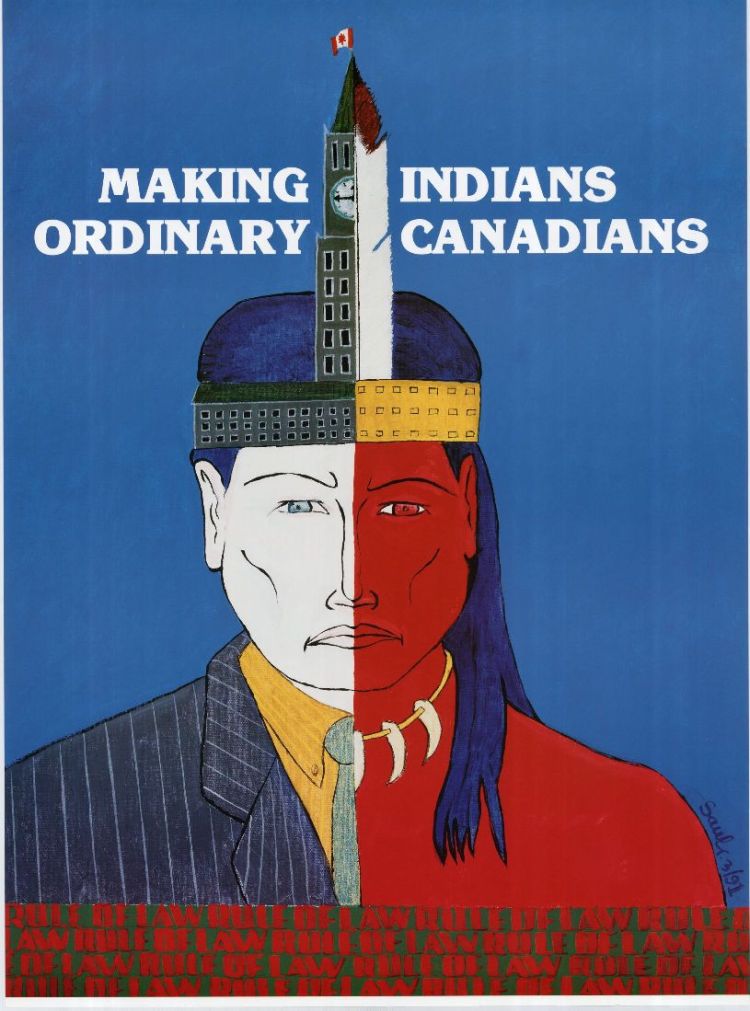
Introducing Ray Bobb and the Urgent Questions Facing Native Politics in Canada Today

by the kites Editorial Committee

August 2023

Communist revolutionaries in Canada have been working over the past two years to sum up and sort through the experience of what’s being called the “third party-building movement” in their country—the period ranging from the early 2000s to the late 2010s and consisting of the experiences of the Revolutionary Communist Party of Canada and Revolutionary Initiative.

In the spirit of this major undertaking of summation, comrades associated with this effort have reached even further back into the revolutionary upsurge of 1960s and 70s and the “second party-building movement” in Canada that comes out of those decades. The work of sifting through these experiences has, as far as we know, taken the form of private conversations, circulating correspondence, studying the limited number of texts and historical material that touches upon or comes out of these periods, and, very importantly, connecting with some of the remaining elder participants of that era who are still around and who have a lot to say and share concerning their political activity.

In 2022, the kites Editorial Committee began corresponding with one such elder, Ray Bobb, a former participant of the Red Power movement in Canada that lasted from the late 1960s into the mid-1970s. We had been familiar with some of Ray Bobb’s earlier works via Revolutionary Initiative, which had published some of his old writings on its website some years ago. In the Fall of 2022, kites received a new piece from Ray Bobb, Theory, Strategy & Tactics in the Native Movement (or, as he calls it, TST), which he described as intending to advance upon or replace all of his earlier writings and thinking. The circulation of TST made for a good opportunity to bring ourselves into conversation with Ray Bobb and the ideas in his new piece, and so in the first half of 2023 the kites Editorial Committee commissioned an interview, which is now being published alongside TST and this editorial introduction.

Continue reading “Introducing Ray Bobb and the Urgent Questions Facing Native Politics in Canada Today”

Theory, Strategy & Tactics in the Native Movement

by Ray Bobb

Written Fall 2022, Published with kites August 2023

See also the kites Editorial Committee’s “Introducing Ray Bobb and the Urgent Questions Facing Native Politics in Canada Today,” as well as an interview with Ray Bobb commissioned by the kites Editorial Committee in the first half of 2023, all of which are being published alongside this contribution by Ray Bobb in kites #9.

Author’s Preface

Theory, Strategy and Tactics in the Native Movement (TST) is meant as a contribution to talk on the Native movement and its future. This contribution will be organized using the time-tested concepts of theory, strategy and tactics. The thought of TST comes from the author’s membership in two activist groups: the Native Alliance for Red Power from 1967 to 1970, and the Native Study Group from 1971 to 1975. TST also comes from more recent encouragement from and discussion with Joyce Mailhot, Cynthia Wright, Columpa Bobb, Geri Ambers, and Natalie Knight.

Ray Bobb is a member of the Seabird Island Indian band on the Fraser River and resides in Vancouver, BC. Ray’s Salish nation, when it existed, covered coastal and interior parts of what are now BC and the state of Washington. He was a member of activist groups known as the Native Alliance for Red Power, 1967-1970, and the Native Study Group, 1971-1975. Ray served in the Royal Canadian Navy before then and is a retired labourer with many relatives. He is sympathetic to the socialist project and loves the Native and working people of Canada.

Theory, Strategy & Tactics in the Native Movement

Theory considers the objective variables of history in their rising and falling trajectories of development. These trajectories can be projected into the future as probabilities. In the present, where the past turns into the future, conscious activity can be imparted as intervention into the developing equation of history to strengthen particular variables or accelerate their development. This conscious intervention is the movement’s long- and short-range plans. Strategy is based on and proceeds directly from theory. Tactics are short range plans directed by strategy and responding to changing political conditions. Depending on political conditions, tactical direction can, at times, seem to oppose strategic direction.

Continue reading “Theory, Strategy & Tactics in the Native Movement”

“If Indians cannot develop into a modern nation then they will disappear”

A kites interview with Ray Bobb

Ray Bobb at False Creek on July 11, 2022. Photo by Cynthia Wright.

kites Editorial Note: The following interview was commissioned by the kites Editorial Committee and was conducted over the first part of 2023. For more information on Ray Bobb and the context of this interview, see the kites Editorial Committee’s “Introducing Ray Bobb and the Urgent Questions Facing Native Politics in Canada Today,” which is being presented alongside this interview and Ray Bobb’s contribution, “Theory, Strategy, & Tactics in the Native Movement, all of which are being published in kites #9.

1. Ray Bobb, thank you for agreeing to this interview. It’s a real pleasure and very important for us to be speaking to an elder revolutionary like yourself—someone who’s lived through and participated in the revolutionary high tide of the 1960s and ’70s that many of us today can only read about.

After many years of not writing, you’ve now come out with “Theory, Strategy & Tactics in the Native Movement” (TST). We’d like to start this interview by asking what the significance of this piece is for you after not writing much in recent decades and so long after the high point of your political activity in the Red Power Movement when much of your previous writing was completed. Without getting too much into the content of TST, by way of introduction can you summarize how you see the progression and/or ruptures within your thinking over the decades?

Continue reading ““If Indians cannot develop into a modern nation then they will disappear””

The CP, the Sixties, the RCP, and the Crying Need for a Communist Vanguard Party Today: Summing up a century of communist leadership, organization, strategy, and practice in the United States so that we can rise to the challenges before us.

By the Organization of Communist Revolutionaries

Appendix 2: Selected Sources on and from the 1960s Revolutionary Movement

A World To Win #12, 1988.

Berger, Dan. Outlaws of America: The Weather Underground and the Politics of Solidarity. AK Press, 2006.

Bin Wahad, Dhoruba, Mumia Abu-Jamal, and Assata Shakur. Still Black, Still Strong: Survivors of the US War Against Black Revolutionaries. Semiotext(e), 1993.

Continue reading “The CP, the Sixties, the RCP, and the Crying Need for a Communist Vanguard Party Today: Summing up a century of communist leadership, organization, strategy, and practice in the United States so that we can rise to the challenges before us.”

The CP, the Sixties, the RCP, and the Crying Need for a Communist Vanguard Party Today: Summing up a century of communist leadership, organization, strategy, and practice in the United States so that we can rise to the challenges before us.

By the Organization of Communist Revolutionaries

Appendix 1: An OCR Study Guide for Training Communist Cadre

The following study guide was compiled by the Organization of Communist Revolutionaries (US) (OCR) to assist comrades in developing into communist cadre by providing them with a grounding in the communist tradition, key communist principles and concentrations of revolutionary strategy, and operational principles for functioning like communist cadre. The texts marked “supplementary” need not all be studied at once, but can be used to deepen and expand your development after the initial study course is completed. We especially suggest that comrades study our Manifesto in detail early on in the process, treating it as a document to guide all our practice, and then restudy individual sections of it in combination with the supplementary texts. The texts marked “overall” provide comprehensive concentrations of communist principles, and should be treated as overarching background to the material as a whole.

Continue reading “The CP, the Sixties, the RCP, and the Crying Need for a Communist Vanguard Party Today: Summing up a century of communist leadership, organization, strategy, and practice in the United States so that we can rise to the challenges before us.”

The CP, the Sixties, the RCP, and the Crying Need for a Communist Vanguard Party Today: Summing up a century of communist leadership, organization, strategy, and practice in the United States so that we can rise to the challenges before us.

By the Organization of Communist Revolutionaries

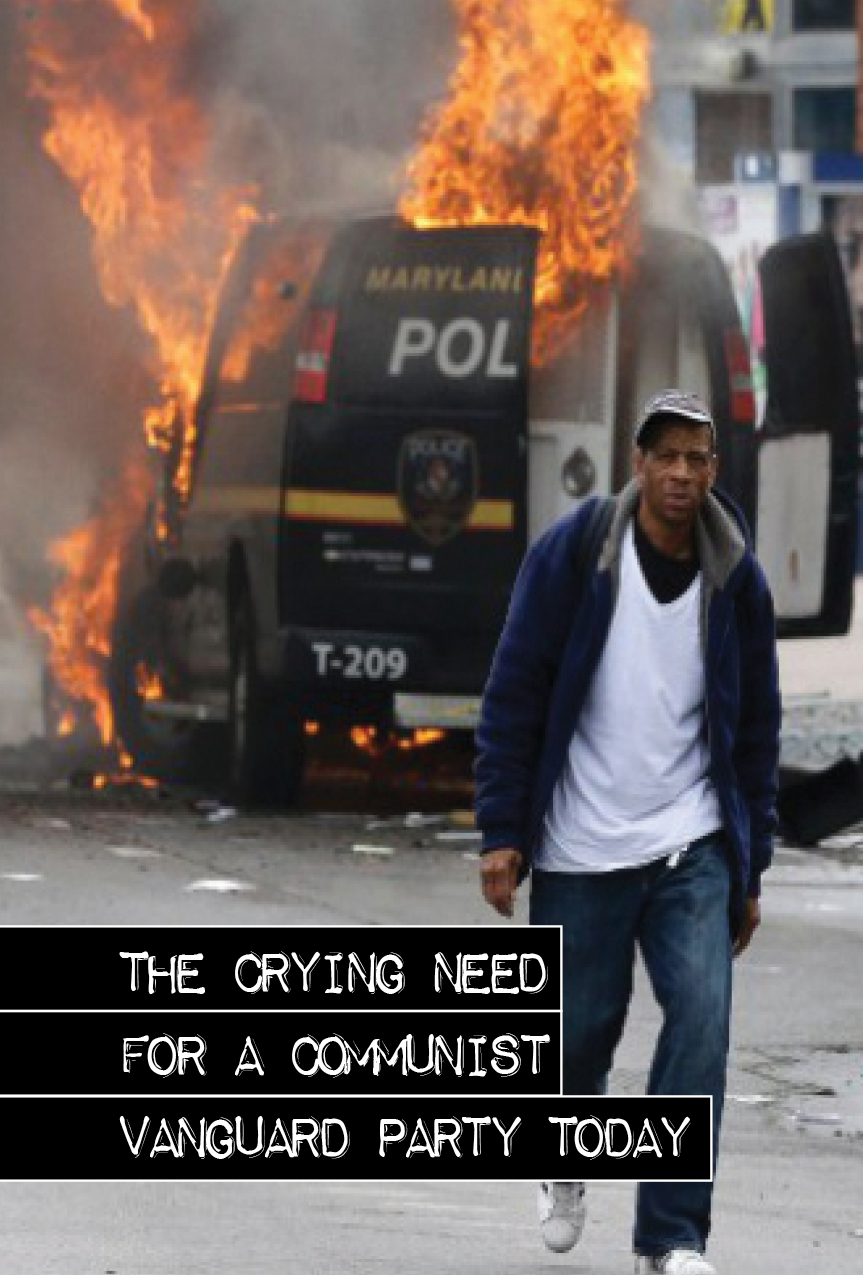
The Crying Need for a Communist Vanguard Party Today

Neither the CP nor the RCP can be resuscitated. The CP carved out its revolutionary heart long ago, and there is no cure for zombies. Any resurgence in membership and interest it may be experiencing today reflects the pathetic reality that is internet “communists” looking for some sense of belonging. The RCP still has some revolutionary trappings, but it is so far degenerated and its organizational structure is so impervious to criticism/self-criticism that it cannot be a vehicle for revolutionary transformation. Perhaps some of its members still have hearts that beat for revolution, but their arteries are clogged and they would need to be removed from the degenerated body they are part of (the RCP) in order to even stand a chance at getting their arteries cleared and once again putting their hearts into revolution.

Consequently, the principal task before all revolutionaries in the US today is to work towards the formation of a new communist vanguard party. For the principal lesson to take from our summations of the CP and RCP is that a vanguard makes revolution a possibility, but in the absence or degeneration of a vanguard, opportunities for revolutionary advance will be lost. If our summations of vanguards past have not sufficiently sobered you up to this fact, then let us look at the consequences of not having a vanguard over the last decade as one major crisis after another drew various classes into political life and as resistance to the injustices of bourgeois rule broke out on a number of social faultlines. As with our summation of the Sixties, what follows will be a “broad strokes” summation of the 2010s, looking at how different classes responded to the major crises and political questions of the decade and what types of politics and political forces emerged.

Continue reading “The CP, the Sixties, the RCP, and the Crying Need for a Communist Vanguard Party Today: Summing up a century of communist leadership, organization, strategy, and practice in the United States so that we can rise to the challenges before us.”

The CP, the Sixties, the RCP, and the Crying Need for a Communist Vanguard Party Today: Summing up a century of communist leadership, organization, strategy, and practice in the United States so that we can rise to the challenges before us.

By the Organization of Communist Revolutionaries

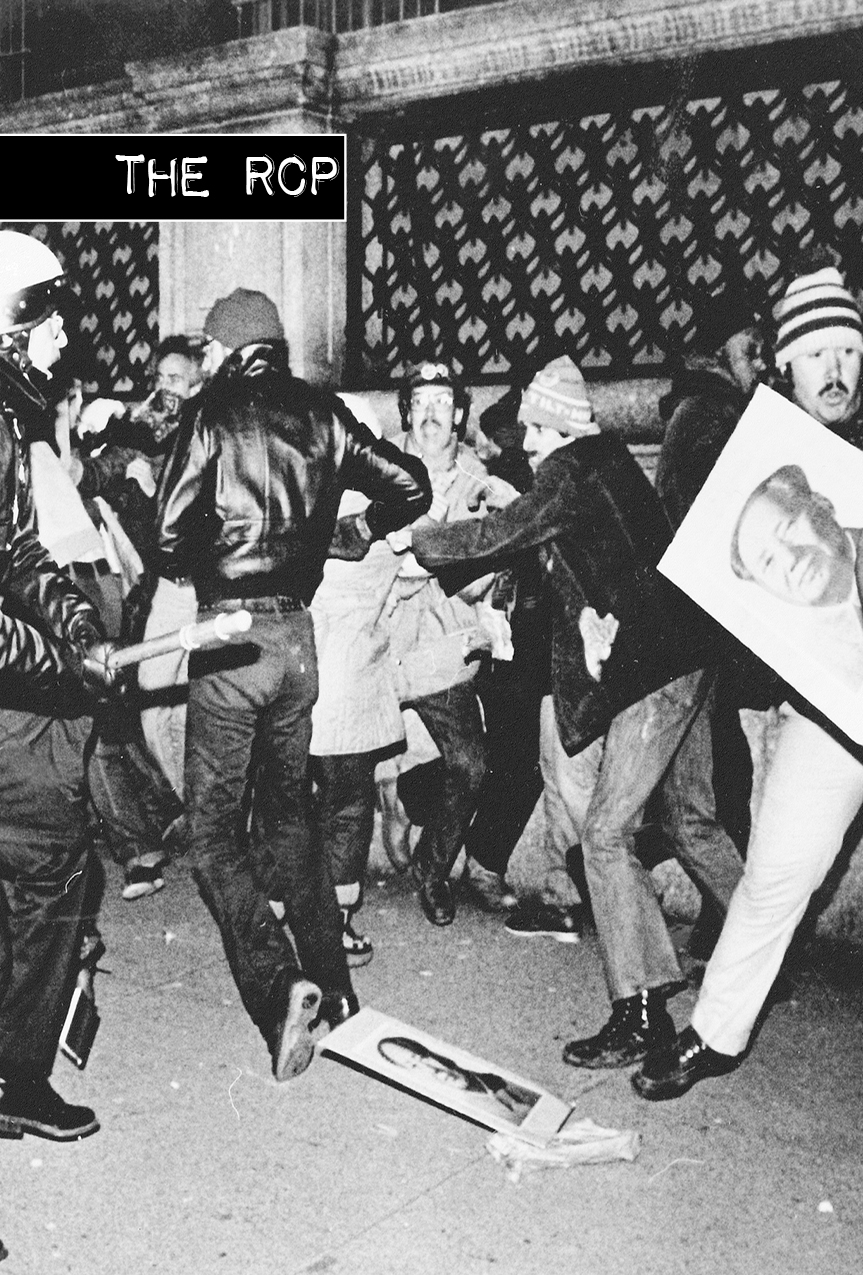
The RCP

1968–72

Moving mountains: the early RU

What eventually became the Revolutionary Communist Party, USA (hereafter RCP) came out of the revolutionary movement of the Sixties, so our summation necessarily begins there, with the formation of the Revolutionary Union, the precursor to the RCP. The widespread revolutionary mood in the late 1960s did not preordain that dedicated militants would seek to build a new communist vanguard party. The dominant politics within the emerging revolutionary movement of that time could best be described as eclectics. Sixties revolutionaries grabbed up different and even opposing ideas, representing different ideologies and world outlooks, about the possibility and necessity of revolution in the US, the role of national liberation struggles, the nature of the Soviet Union and countries in its orbit such as Cuba, and the revolutionary road offered by Mao’s leadership and the Great Proletarian Cultural Revolution in China. These different ideas, or, in communist parlance, different political lines, often coexisted within the same organizations, and sifting through what was correct from what was incorrect, what would serve the revolutionary transformation of society from what was a dead end, required line struggle and firm grounding in communist principles while creatively applying those principles to the conditions of the US at the time. In this situation, the greatest contribution of the Revolutionary Union was to argue for communist principles and clarity on the key questions before the revolutionary movement, so the beginning of this summation will focus on how it developed and fought for its ideological and political line.

Continue reading “The CP, the Sixties, the RCP, and the Crying Need for a Communist Vanguard Party Today: Summing up a century of communist leadership, organization, strategy, and practice in the United States so that we can rise to the challenges before us.”